Skip to content
Home
PPI Jumps by Most in Three Years as Companies Pass Along Tariff Costs
CC-Transcript
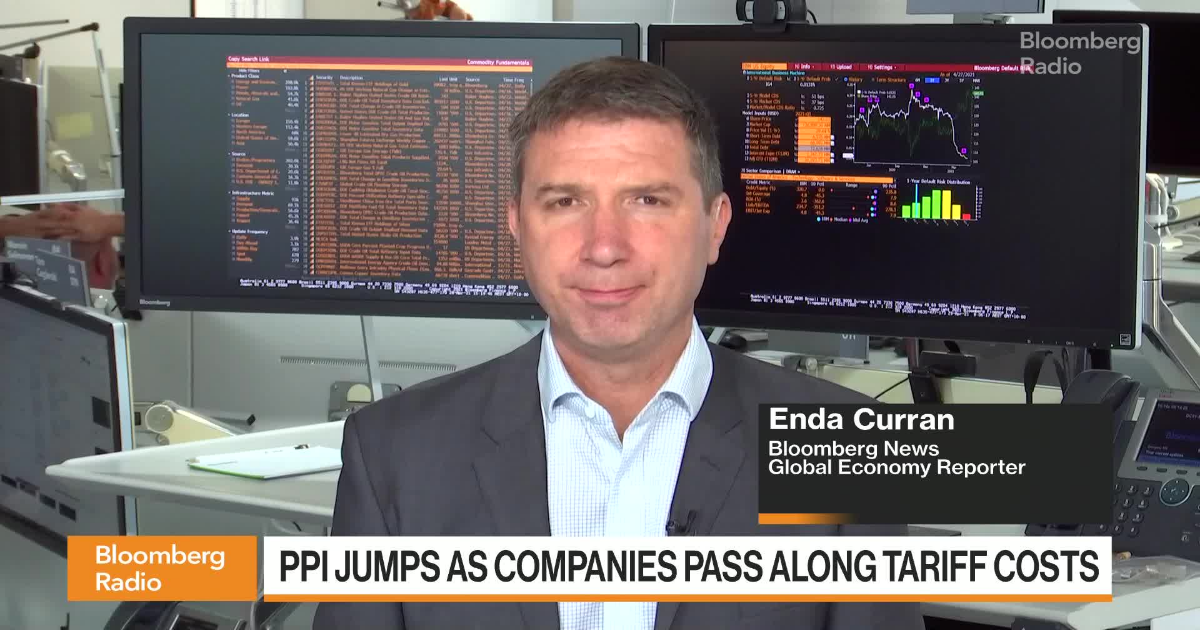
- 00:00It was the highest, a 0.9% on month, which is the biggest increase in three years, as you’re saying there, Paul. So on a headline basis, that’s a big number. You know, under the bonnet. It’s been driven by services. You have financial services margins pushing up that figure, probably reflecting the stock market boom. And on the other side, there’s retail and wholesale margins. And this is where things get into the weeds pretty quickly. There are some views that perhaps that side of things is reflecting rising cost pressures linked to tariffs. Maybe those tariffs are starting to be passed on. So there’s a little bit of something for everyone in this people are reading. But I think the overall takeaway is that quite apart from, yes, on a headline basis, it’s much stronger than expected. It also leans into the idea that we don’t yet know exactly how this tariff story is going to impact inflation. You know, I’ve seen some economists say the Fed is correct to be wholly on this wait and see mode when they see a dataset like this, because we don’t yet have complete clarity. At a very least, we know there are price pressures from tariffs. No doubt about it, economists are warning more is to come. More is expected over the months ahead. But it’s very much almost at this stage. Take it one month at a time to try and get a clearer handle on this. Yeah. And and can you can can you break down that a little bit more? What about the extent to which companies can can pass that burden from tariffs on to consumers. Yeah. Well it’s obviously going to lose its friends on the on the on the product and it depends on their company margins in the sector. Broadly speaking, there have been, you know, the two companies, there’s one company says, look, companies can absorb this in their margins. Either they’re a seller on the other side of this trade can absorb some of it and the company can absorb some. But margins have fattened, you know, since the pandemic years due to inflation, everything else. Then there’s that camp, and then there’s a camp of saying no, companies can only absorb this for so long, and then they will have to start passing it along to the end customers. And I think that’s probably where we where we feel like we are in the debate at the moment that some of this is starting to leak through the question of how much of it is passed on. And remember, this is the argument that inventories haven’t been stocked up earlier in the year. As those inventories come down, companies have to restock at higher prices and pass on those costs, pass on those goods at a higher cost to consumers. So to think is this tariff inflation will surface in the months ahead. And the White House, of course, pushes back strongly on that. They they don’t see any tariff inflation in these figures. But I think if those sitting in the middle of this debate say we just it’s going to take a few more months yet to get clarity on the extent of how tariffs are, in fact, the overall are affecting overall prices.